
General information grounded in the listed official sources, not immigration, legal, tax, payroll, healthcare, or employment advice. Confirm current requirements before acting.
Start with the context
Avoid treating a city guide as universal. Local services, housing conditions, transport and community life differ across Sweden. Start with your municipality and official public-service information, then use trusted local sources for practical details.
First months, in layers
Settle in layers: this week, this month, this season
Settling in stalls when it is treated as one endless to-do list. It works better as a few layers with different time horizons: make the first week function, build local routines across the first month, and let language and community grow through the season. Each layer has its own next step.
Make the first week function before improving anything
Focus the first week on a place to sleep, a reliable contact method, a way to pay and a short list of known next steps. Those basics make the start manageable while longer-term tasks continue. A slower first month can still be a good start.
Write the four down and mark their status every day or two. When one stalls , a phone number, a payment method, a confirmed address , it becomes a specific question with a specific owner instead of a general sense of being behind.
Secure the first address safelyLearn how your municipality reaches you
A large share of everyday practical life runs through your municipality and the national agencies, and much of it reaches you at your registered address or through official e-services. Learning how your municipality publishes local information , waste, schools, leisure, local services , turns vague settling-in into a readable local task.
Your address is also an official fact. The Tax Agency's moving-to-Sweden process records where you live, and a later move within Sweden means reporting the change. Keep official letters and e-service access working; a missed letter is a common way people first discover that the address record matters.
Keep registration and address facts currentPut language learning in the calendar, not on the wish list
Language is the layer that compounds. Municipal adult education in Swedish for immigrants (sfi) is free of charge and is arranged through the municipality where you live; Skolverket's study guidance describes how it is organised. Whether sfi is your route or not, decide when in the week Swedish actually happens , a course, self-study, workplace practice , and protect that slot.
Keep the expectation realistic: a course takes different lengths of time for different people, and a new job or a child's schedule can displace it. The useful plan names the route, the weekly slot and the next checkpoint, with a vague ambition to become fluent.
Plan family language and education pathsBuild the everyday map
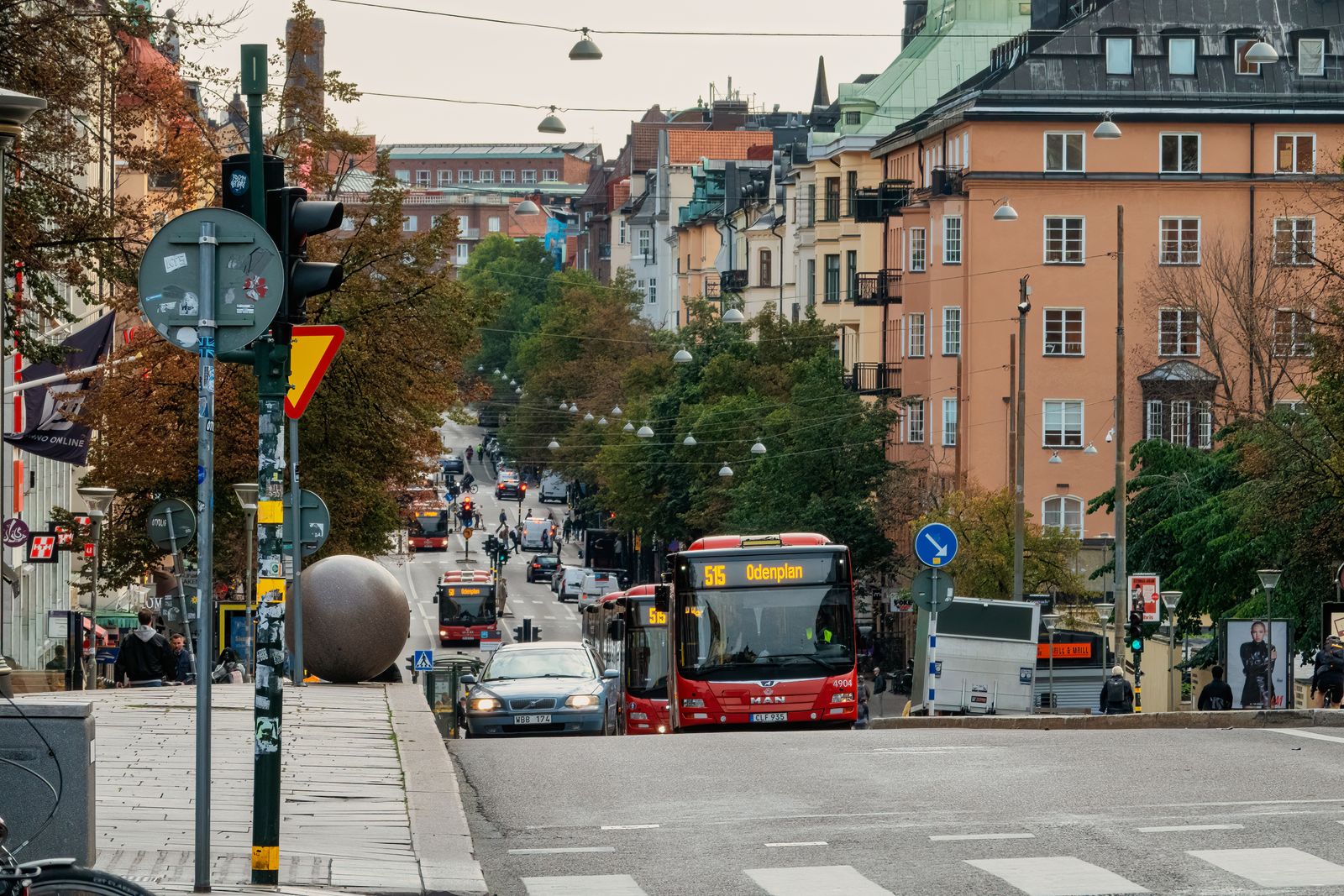
Your everyday map is the small set of journeys and services you actually use: the commute, the food shop, the healthcare contact, the library, the place you exercise. Building it takes less time than people fear, and it is what turns an unfamiliar city into a manageable one.
Check the journeys in the season you arrive; winter changes how a commute feels. If you expect to drive, read the Swedish Transport Agency's guidance for foreign licences before arranging a car or driving lessons.
Check transport and driving rules earlyKeep the health route visible before you need it at 2 a.m.
You do not need to research medicine in advance, but you do need one visible fact: where to turn when health questions appear. 1177 explains how to seek care and find guidance, and 112 is the emergency number. Write both down where everyone in the household can find them.
The rest of the health layer , a chosen healthcare contact, insurance questions, what your situation means for costs and coverage , can be assembled calmly during the first months. Keep medical and insurance documents with the provider or authority channel that asks for them.
Prepare healthcare and insurance questionsReview the plan at real milestones, not by guilt
Settling has natural checkpoints: after the first week, after the first month, after the first season. At each one, reopen the plan: what now works, what stalled, which authority or employer question moved, what the next layer needs. A stalled item gets an owner and a next action, with a rewrite of the whole move.
This is also how you notice real change. A new address, a job change or a family fact updates the plan the same way it updated your original move brief , by editing the relevant line, by editing the relevant line.
Return to the first-year move brief

Settled is a direction, with a state
Nobody finishes settling in, and nobody needs to. What makes the first months work is the same discipline as the move itself: a minimal first layer that functions, routines that appear month by month, language that compounds, and a plan you revisit at real milestones instead of a vague standard of feeling established. Keep the rhythm sheet alive and let each layer take its own time.
Start with the first-year planKey points
Use your municipality
Municipal websites are often the right first place for local services, school, waste and practical information.
Build routines gradually
Address, transport, language, healthcare and community questions do not need to be solved on the same day.
Keep help routes clear
Use emergency and healthcare services for urgent needs, and local public services for ordinary practical questions.
A practical order of work
First-months checklist
Make a short local list rather than trying to reproduce another city’s routines.
Use these steps as a working sequence. Each one points back to the official sources below; confirm what applies before acting.
Follow Skatteverket's moving and population-registration guidance if it fits your situation.
Sources: skatteverket-moving
Plan the local journeys and essential services you will use each week.
Choose a Swedish-language learning route that fits your situation.
Sources: skolverket-sfi
Use 1177 or 112 as appropriate when you need health or emergency guidance.
Sources: 1177-healthcare
Sources & official references
Primary Swedish and EU sources are listed here. Check each source for current amounts, forms and requirements.
Skatteverket: Moving to Sweden and population registration
Skatteverket (Swedish Tax Agency)
Reviewed 2026-11-14Open source ↗Skolverket: Swedish for immigrants (SFI)
Swedish National Agency for Education
Reviewed 2026-07-29Open source ↗Transportstyrelsen: Driving licences
Swedish Transport Agency
Reviewed 2026-11-14Open source ↗1177: Healthcare in Sweden
1177 Vårdguiden
Reviewed 2026-11-19Open source ↗
Common questions
- Which Swedish city should I choose?
- Sweden Entry does not rank municipalities or neighbourhoods. Compare the factors that matter to your work, family, housing and travel needs.
- Where should I go for an emergency?
- Use Sweden’s emergency and healthcare guidance. Call 112 for an emergency; use 1177 for healthcare guidance when appropriate.
Related guides
Next step
Start with a clearer plan
Use a browser-only planning checklist to identify your next practical questions before sharing sensitive details.
About 5 minutes · no account · selections stay in your browser